Economic Stewardship Must be Central to Veto Session Decisions

Economic Stewardship Must be Central to Veto Session Decisions

This commentary is by Megan Sullivan, Vice President of Government Affairs for the Vermont Chamber of Commerce.

The 2023 legislative session has been underscored by new and increased taxes and fees on both individuals and businesses, leading to $150 million of likely cost increases for Vermonters. This significant burden is particularly concerning given the ongoing economic pressures of high inflation, workforce shortages, and declining state revenue from personal income tax. All of this is happening as the state settles into a post-pandemic baseline.

While economists from both the Legislature and the Governor’s Administration warned that revenue would decline, state revenue is falling faster than predicted. The General Fund, Transportation Fund, and Education Fund all failed to meet monthly expectations in April. This was the second month in a row that revenue targets were not met, emphasizing the need for fiscal responsibility to be at the center of decisions made by the General Assembly during the upcoming veto session.

Record-high spending in recent years has been possible due to the influx of one-time federal funds for pandemic relief. However, without the ongoing federal aid, legislators seem determined to maintain record levels of government spending by raising new taxes and fees on Vermonters. Amid economic uncertainty, businesses, in particular, are expected to take on several new tax measures. The average Vermont business has five employees, and the ramifications of increased costs will be felt across communities. This means that our local coffee shops, general stores, plumbers, mechanics, and breweries, as well as those they serve, will all be impacted.

The veto session will be an opportunity for legislators to review and consider the long-term implications of excessive spending proposals on the Vermont economy. The collective impact that legislative action, or inaction, will have on businesses and individuals is already staggering:

  • The first-ever state payroll tax would have working Vermonters set to pay $100 million annually.
  • DMV fees are poised to increase across the board by $20 million.
  • Licensure and renewal fees through the Office of Professional Regulation would increase for many of Vermont’s regulated professions.
  • Fuel costs could increase by 70 cents a gallon with the creation of the Clean Heat Act.
  • Property taxes are expected to rise by an additional $30 million with an increase in state funding for nutrition programming.
  • A Trump-era tax on business was upheld. The State and Local Tax (SALT) cap deduction workaround would have saved Vermont businesses $20 million in federal taxes but was derailed in the final days of the regular session.

These measures will further strain Vermonters, limiting the ability to invest, save, and stimulate economic growth. While we believe in the importance of funding critical programs and addressing pressing issues, we also know that it’s possible to achieve a balance between spending and the economic vitality of Vermont.

The Vermont Chamber of Commerce encourages legislators to seek input from constituent businesses and carefully evaluate the potential long-term consequences that veto session bills will have on Vermont. We can strike a balance between addressing critical needs and ensuring a favorable business environment. By centering economic stewardship, we will foster a prosperous Vermont for all.
_______________________

About the Vermont Chamber of Commerce
The most influential statewide, not-for-profit business organization. The Vermont Chamber of Commerce represents every sector of the state’s business community focusing its work on advancing Vermont’s economy.

About Megan Sullivan

Megan Sullivan, of Jericho, is the Vice President of Government Affairs at the Vermont Chamber of Commerce, whose mission is focused on creating an economic climate conducive to business growth while enhancing Vermont’s quality of life.

SHARE THIS ARTICLE

RECENT NEWS

Guest Perspective: “Sharing the Message on Bridging the Digital Divide with Rural Broadband”

Guest Perspective: “Sharing the Message on Bridging the Digital Divide with Rural Broadband”

By Roger Nishi, Vice President of Industry Relations, Waitsfield and Champlain Valley Telecom
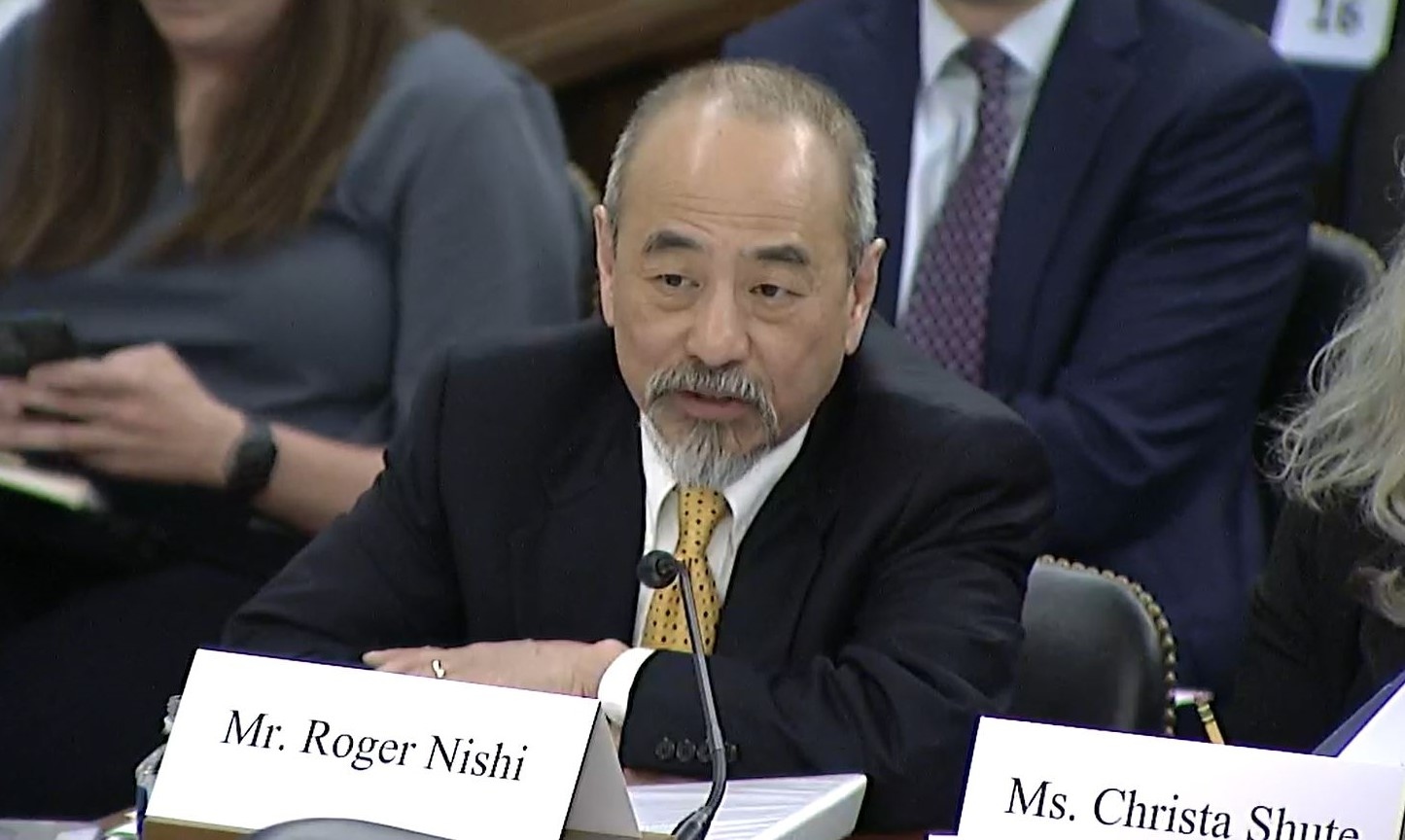
In the past few weeks, Waitsfield and Champlain Valley Telecom (WCVT) had the opportunity to share its perspective on rural broadband in two ways. First, I had the honor of testifying in front of the United States Senate Committee on Agriculture Subcommittee on Rural Development and Energy. I am grateful to have had the opportunity to share my insights and experiences in the field while representing WCVT and Vermont. The hearing focused on rural broadband and its role in connecting our communities to the digital economy.

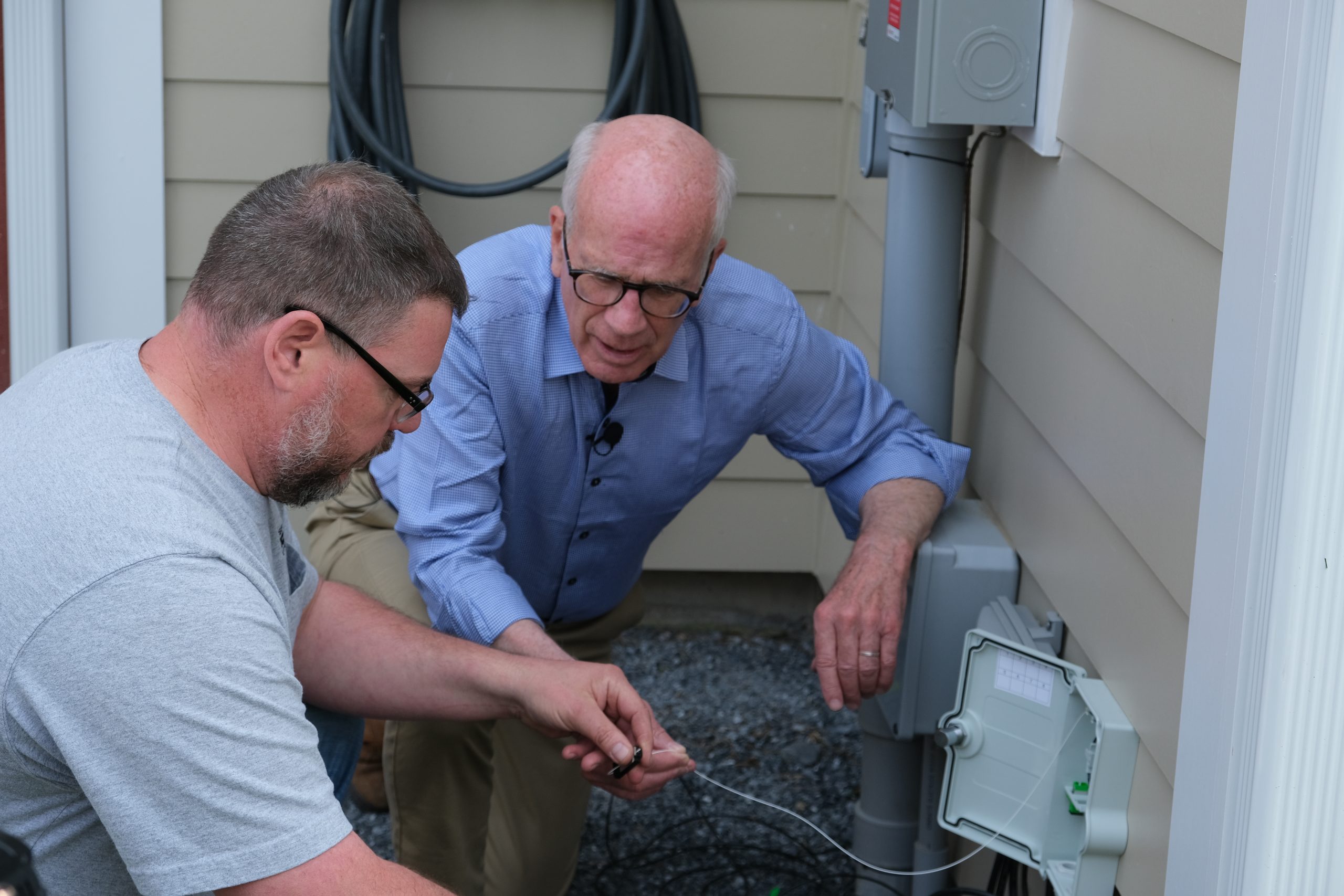
At this hearing, Senator Welch introduced the ReConnecting Rural America Act with Senator Roger Marshall of Kansas, to ensure that rural unserved communities receive the same level of service that is available to urban customers. Secondly, WCVT hosted Senator Peter Welch on a job share to get out into the field to see firsthand the challenges we face in building fiber-optic broadband in rural communities.
At WCVT, we strongly believe in the programs offered by the United States Department of Agriculture (USDA), particularly the Rural Utilities Service (RUS). Throughout our history, we have had a fruitful relationship with the USDA, including its predecessor agency, the Rural Electrification Administration (REA). In Vermont, we have witnessed firsthand the impacts USDA programs can have on our communities.

In the 1960s, with the support of REA loans, WCVT upgraded our network to provide direct dial telephone service and convert all customers to single-party lines. In 2010, we were awarded a significant grant and loan through the RUS Broadband Initiatives Program (BIP), which allowed us to bring fiber-to-the-home technology to over 740 homes and businesses. These investments have transformed our network, providing better service and higher speeds to our customers.

During my testimony, I emphasized several key areas where USDA can further support rural networks:

  • Future-Proofing with Fiber: To ensure the long-term viability of rural networks, it is crucial to prioritize fiber optic infrastructure. Fiber is the most reliable and scalable technology, capable of meeting the growing demands of our customers. I advocated for maintaining a minimum speed requirement of 100/100 Mbps for eligible projects, as this ensures the deployment of fiber networks. Fiber is truly the future, and we need to embrace it for all rural areas.
  • Consider Track Records: When allocating funding, it is important to consider the experience and track records of providers. Companies that have a proven history of building and expanding networks in rural areas should be prioritized. Grant application scoring should not penalize commercial companies, as they play a vital role in connecting our communities.
  • Accurate Mapping and Efficient Permitting: To avoid duplicative funding and overbuilding, it is crucial to have accurate mapping of unserved areas. This will help direct resources where they are needed most. Additionally, streamlining the permitting process and ensuring sufficient staffing will prevent unnecessary delays in project implementation.

In addition to USDA programs, I highlighted other factors that impact rural broadband, such as the Universal Service Fund (USF) and the need to pass legislation like S.341, the Broadband Grant Tax Treatment Act. USF plays a crucial role in ensuring sustainable networks and keeping rates affordable for rural consumers. The Broadband Grant Tax Treatment Act aims to prevent the taxation of grants received by commercial companies, allowing the funds to be fully utilized for network expansion.

Lastly, I emphasized the importance of the Affordability Connectivity Program (ACP) in providing equitable access to broadband. Adequate funding for ACP and an increase in the per-customer amount will help bridge the affordability gap and ensure that all rural residents can benefit from reliable and affordable internet services.

USDA’s broadband programs are instrumental in connecting rural Vermont communities to the digital economy. With a focus on future-proofing networks, considering track records, accurate mapping, efficient permitting, and supporting complementary programs, we can make significant strides in bridging the digital divide.

The full hearing is available to watch, here.

About the Author:  Roger Nishi is the Vice President of Industry Relations at Waitsfield and Champlain Valley Telecom and has over 36 years of industry experience. Roger currently serves on the board of directors for the Telecom Insurance Group and is an active member of NTCA – The Rural Broadband Association’s Industry and Regulatory Policy committee and NECA’s Cost Issues Task Group. At WCVT Roger represents the company’s interest on regulatory and political issues at both the state and federal level. He is also a member of the Vermont Chamber of Commerce Board of Directors.

About Waitsfield and Champlain Valley Telecom: Waitsfield and Champlain Valley Telecom is an independent, privately owned telephone company serving the Mad River and Central Champlain Valley regions of Vermont. Locally owned and operated, Waitsfield Telecom has been providing telephone service to the Mad River Valley since 1904.

 

31 Ways Legislative Action or Inaction Could Impact Businesses After This Session

31 Ways Legislative Action or Inaction Could Impact Businesses After This Session

Record-high spending in recent years has been possible due to the influx of one-time federal funding for pandemic relief. However, legislators seem determined this session to maintain record levels of government spending with new revenue sources, even amid historical economic uncertainty. Despite a session underscored by new and increased taxes on both individuals and businesses, several crucial bills that will address business needs also made their way through the legislative process. A full recap of session highlights is available below.

Total cost increases for Vermonters will amount to $150 million. A far cry from the $1 billion in proposals by legislators at the start of the session, this is still an unsustainable figure with an expected economic downturn approaching.*

The first-ever state payroll tax was passed, adding to Vermont’s already high tax burden. Working Vermonters are set to pay $100 million annually.*

Fuel costs could increase by 70 cents a gallon with the creation of the Clean Heat Act, giving the Public Utility Commission two years to create a credit and trade market for renewable fuel sales.

Vermont’s only business incentive program is extended. The Vermont Employment Growth Incentive program was rerouted from legislation that was originally intended to effectively end the program.

A pandemic innovation, alcohol-to-go will remain legal for businesses to sell for two more years.

Bars are back in business after an outdated state statute was amended which will allow businesses to obtain liquor liability insurance more easily.

Small businesses will not have to shoulder the added weight of subsidizing premiums for the individual healthcare market. The individual and small group markets will remain separated through 2025.

70% of Vermont jobs don’t require a college degree, but no legislative action was taken to address the needs of Vermont’s career and technical education system.

Military retiree pensions will remain largely taxable. The Legislature did not act to leverage a full exemption as a workforce solution. 

Data on short-term rentals will have to wait another year. The statewide rental registry proposal was relegated to a study. 

DMV fees are set to increase across the board by $20 million.*

Licensure and renewal fees through the Office of Professional Regulation will be increasing for many of Vermont’s regulated professions.

Property taxes are expected to increase by an additional $30 million with an increase in state funding for nutrition programming.*

Over 150 new positions were created within the State of Vermont, amid a severe workforce shortage. This will increase the competition with businesses looking for employees. *

Broadband buildout received $20 million to boost service with over $100 million in the NTIA Middle Mile Broadband Infrastructure Program to expand access to high-speed internet.*

Homeownership remains elusive for middle-income Vermonters, but $10 million of funding in the BAA for the Missing Middle-Income Homeownership Development Program will help.

Employer housing investment opportunities will be created through a revolving loan fund for middle-income renters.

Business infrastructure funding was allocated to local development corporations to the tune of $5 million for business relocation and expansion efforts, including the purchase, demolition, and renovation of property for industrial use.*

Rural infrastructure capacity funding of $3 million is slated to help underserved communities access and allocate federal ARPA funding for projects.

Child Care Financial Assistance Program (CCFAP) funds will be available to use regardless of provider STARS rating, increasing access to the subsidies.*

Expedited smart growth housing development will be possible due to an omnibus housing bill that reduces local zoning barriers and expands Act 250 exemptions.

A Trump-era tax on business was upheld, with the workaround derailed in the final days of the session. The State and Local Tax (SALT) cap deduction workaround was a fix that was estimated to bring $1.7 million in state revenue annually and would have saved Vermont businesses $20 million in federal taxes.*

Advanced manufacturing businesses will be able to send workers to Vermont State Colleges for a certificate in 3-D technology from a $1.5 million appropriation.*

Young professional recruitment efforts will get a bump with $1.5 million towards loan forgiveness for recent college graduates who commit to working in Vermont for two years following graduation. Each eligible student is set to receive up to $5,000.*  

Refugee employment assistance earned $1 million of funds allocated to the State Refugee Office for the Employment Assistance Grant Program.*

Efforts to upskill workers received $1.5 million to educate Vermont residents seeking to transition to a new career or to enhance job skills through the University of Vermont’s Upskill Vermont Scholarship Program.*

Technical assistance funding of $1.25 million was provided to the Regional Development Corporations to provide small and mid-sized businesses with professional and technical assistance. *

Brownfield remediation projects will get another $8 million in funding for the assessment, remediation, and redevelopment of sites.*

Upward pressure on system costs is expected from increases in worker’s compensation and temporary partial disability benefits.

The Treasurer’s Office will create a state-run retirement program by 2025 for employees of Vermont businesses. The program will put 5% of an employee’s earnings into an IRA but includes an opt-out provision.

A 100% raise for legislators will see pay and benefits double for members of the House and Senate. This was done, in part, to entice more people to run for office. Any takers? *

* Legislation related to these topics remains in play and is pending final action from the Legislature. While the fate of most items can be anticipated, there is a caveat that these issues remain in flux until the veto session.  

SHARE THIS ARTICLE

RECENT NEWS

Guest Perspective: “Celebrating Inclusion Week in Vermont”

Guest Perspective: "Celebrating Inclusion Week in Vermont"

By Peter McDougall, President + Director, Paul Frank + Collins P.C.

In recent years, the second week of May has been proclaimed “Inclusion Week” in Vermont by Governor Phil Scott. The proclamation reaffirms Vermont’s commitment to eliminating hatred and bigotry in all systems and institutions to improve outcomes for all Vermonters and build more multicultural and socially cohesive communities. The week of recognition is a byproduct of the Declaration of Inclusion initiative which is an ongoing statewide diversity, equity, and inclusion effort.

One of several events recognizing Inclusion Week was held in Burlington to highlight the first 110 municipalities that have adopted a Declaration of Inclusion as well as several partner organizations that have committed to elevating the work of the initiative. The Vermont Chamber was recognized as a dedicated partner, collaborating with initiative leaders to achieve the goal of each Vermont municipality adopting and implementing a declaration.

The event, attended by over 50 community leaders, featured several speakers including people from three municipalities who each shared the impact of the initiative in their town or city. Don Turner, Town Manager for Milton, Jesse Alexander Plotsky, a member of Bethel’s Equity and Inclusion Committee, and Michael Sherman of Montpelier, each reflected on why their municipality had adopted a declaration of inclusion and the work ahead for meaningful implementation. Xusana Davis, the State of Vermont’s Executive Director of Racial Equity, and Lt. Governor David Zuckerman also spoke at the event in support of the initiative along with members of Vermont Interfaith Action which hosted the celebration.

With 67% of the recent population growth in Vermont happening in municipalities that support a Declaration of Inclusion, it’s clear reinforcing welcoming and belonging for all people in all Vermont communities is a positive growth indicator. To learn more about the Declaration of Inclusion, and how to adopt one in your city or town, visit: vtdeclarationofinclusion.org

About the Author:  Peter McDougall has been with Paul Frank + Collins P.C. for over 17 years, currently serving as the President and Treasurer and on its three-member Executive Committee. Pete is a member of the Captive, Corporate, and Insurance law teams. He also serves as the Chair of the Vermont Chamber of Commerce Board of Directors and as a member of the Diversity, Equity, and Inclusion Task Force.

About Paul Frank + Collins: Paul Frank + CollinsP.C.  is a 50+ employee business and litigation law firm with regional, national, and international reach from its Vermont headquarters and satellite offices in Massachusetts and New York. Paul Frank + Collins attorneys provide effective and cost-efficient legal services to individuals and to business clients of all sizes in various industries throughout the world. Paul Frank + Collins P.C. is celebrating its 55th anniversary in 2023.

Vermont Chamber Secures Extension for Vermont’s Only Business Incentive Program

Vermont Chamber Secures Extension for Vermont’s Only Business Incentive Program

The miscellaneous tax bill H.471 became the vehicle to pass an essential one-year extension of the Vermont Employment Growth Incentive program. The issue was previously housed in S.94, which also included language on Tax Increment Financing. With little to no time to review, discuss, or take testimony on proposed House changes to S.94, the Senate decided to postpone action on program changes until next year. The Vermont Chamber played a crucial role in rerouting legislation that would have effectively ended the VEGI program and instead advocated for a balanced review and modernization of the program. 

SHARE THIS ARTICLE

RECENT NEWS

Legislature Levies an $80 Million Payroll Tax on Vermont Businesses and Employees

Legislature Levies an $80 Million Payroll Tax on Vermont Businesses and Employees

Following tense negotiations between the House and Senate on how to increase funding beyond the $125 million the state already invests in childcare, it was ultimately decided to impose a 0.44% payroll tax increase on Vermonters. The Vermont Chamber has been deeply concerned throughout the session that this legislation would increase the cost burden on businesses without clearly addressing workforce solutions. While the Governor’s budget included a record $50 million of new funding for this sector, the Legislature wanted to spend more. The measure would raise $80 million of the over $100 million required annually to nearly double spending on the industry. The tax is to be split between employer and employees, with employers paying three-quarters of this new tax. The bill contains no guaranteed solutions for the availability, affordability, and dependability of childcare. As pointed out by members of the House Ways and Means Committee, it is even likely to prompt childcare price increases for some families. Given that the bill would impose a tax increase, the Governor is expected to veto it.

In a concession to the Senate’s position on a childcare revenue source, the Chair of the House Ways and Means Committee insisted that the Senate remove the State And Local Tax (SALT) deduction limit workaround from the miscellaneous tax bill H.471. This measure would have saved Vermont businesses $20 million in federal taxes that were imposed during the Trump Administration and brought $1.7 million of new revenue to the State. Vermont is one of the last remaining “blue” states that has not created this workaround. While members of the committee seemed baffled by the decision to abandon this change which they had worked on through the session, they ultimately concurred with the bill changes and their Chair.  

SHARE THIS ARTICLE

RECENT NEWS

Concerns Remain That Childcare Bill Will Not Meet Workforce Needs

Concerns Remain That Childcare Bill Will Not Meet Workforce Needs

The House Ways and Means Committee continued to take testimony on childcare legislation that would raise $100 million in taxes to almost double spending for the childcare industry without any assured fixes for the availability, affordability, and dependability of childcare for Vermonter’s workers. While the bill offers relief to the highest and lowest-income Vermonters, the Vermont Chamber remains concerned that the needs of middle-income Vermonters will not be met. The Commissioner of Taxes, Craig Bolio, testified that Vermonters currently pay 13.6% of their income in state and local taxes, which is higher than any other state except New York, Connecticut, and Hawaii. The Commissioner also noted that this year, Vermont taxpayers are expected to pay over $80 million in property tax increases, and the Legislature is considering over $285 million in additional taxes. The combined $365 million tax increase is more than two times the projected General Fund revenue drop from FY23 to FY24.  

A SALT deduction that would save Vermont companies $20 million in federal taxes was added to the bill. This is a measure supported by the Vermont Chamber, but it does not do enough to outweigh the full impacts that middle-income earners and small businesses will feel from these tax impacts. 

SHARE THIS ARTICLE

RECENT NEWS

House Leadership Restores Essential Provisions in “HOME” Bill

House Leadership Restores Essential Provisions in “HOME” Bill

Successful leadership on housing displayed by the Rural Caucus and Speaker Jill Krowinski culminated with the House Environment & Energy Committee passing an amendment to the HOME bill with a vote of 11-0-0. The amendment incorporates many aspects of the Rural Caucus amendment advocated for by the Vermont Chamber. This includes increasing the Act 250 jurisdictional threshold increase for housing units from 10 to 25 units in downtowns, neighborhood development areas, growth centers, and village centers. With paid family and medical leave off the table this session, the Vermont Chamber is now working to secure any newly available funds for the Revolving Loan Fund to allow employers to invest in housing solutions for their workers. 

While the bill does not meet the full potential of what was originally passed out of the Senate Economic Development, Housing, and General Affairs Committee, the version now up for a vote on the House Floor exceeds the version that was previously passed out of the Senate. Additional amendments to the bill are expected to be debated on the House floor next week and further conversation on Act 250 modernization is set to take place next session. 

Amendments to the bill achieve the following: 

  • Permits the Department of Housing and Community Development to use up to 20% of municipal planning funds to help towns meet neighborhood development area requirements.  
  • Adds a Regional Planning Report that requires the Vermont Association of Planning and Development Agencies to study improving coordination between municipal, regional, and state planning. 
  • Tasks the Natural Resources Board with determining what is required to create a municipal delegation process. 
  • Includes a Rural Recovery Council to strengthen coordination in rural economic development, housing resource navigators to work with local organizations and private developers, and a directive to eliminate redundancies in state permitting requirements. 
  • Returns the number of people who can appeal a municipal zoning permit from 1 to 10.  

SHARE THIS ARTICLE

RECENT NEWS

Vermont Chamber Joins 430+ Business Groups Calling for Action on Immigration

Vermont Chamber Joins 430+ Business Groups Calling for Action on Immigration

The Vermont Chamber signed a letter to members of Congress urging them to make immigration reform a top priority to address the workforce crisis. Vermont employers of all sizes and across all industries are facing chronic workforce shortages that significantly limit the ability of their businesses to grow. In an increasingly competitive marketplace, the vast shortcomings of our legal immigration system are a key contributing factor as to why employers are struggling to recruit and retain talent. In addition to the Vermont Chamber, the letter was supported by 430 business associations from all 50 states, spanning a host of industries, including healthcare, manufacturing, restaurants, hospitality, retail, construction, agriculture, engineering, and food processing, among others.

Vermont businesses would welcome immigration reform solutions such as suspending the cap on H-2B visas until the domestic labor force stabilizes, expediting interviews for J-1 applicants supporting the hospitality industry, and applying a blanket National Interest Exemption to all existing J-1 visa holders when they seek admission to the U.S. at a port of entry. As advocates for advancing the Vermont economy, we recognize the wasted opportunity that failed national immigration policy has caused. Breakdowns in our immigration system, deliberately imposed or resulting from inaction discourage economic activity, and restrict workforce development. An immigration system that meets the needs of our economy and reflects Vermont’s values is essential to ensuring an economically secure future for Vermont.

The full letter and list of signatories are available, here.

SHARE THIS ARTICLE

RECENT NEWS

Employment Law Legislation Leads to More Questions Than Answers

Employment Law Legislation Leads to More Questions Than Answers

The House General and Housing Committee took testimony throughout the week on the bill that would remove the standard of severe or pervasive for unlawful harassment or discrimination. The only member of the committee with human resources experience raised concerns about how challenging implementation would be. Rep. Ashley Bartley (R-Franklin-1) asked the committee to consider codifying the standards of severe or pervasive with guidance around those standards like California’s law but ultimately the suggestion was not met with interest from other legislators. S.103 was voted out of committee and is now poised for passage in the House. If the bill becomes law, this will likely incur litigation to determine the guidelines for unlawful harassment and discrimination.  

The Vermont Chamber previously testified in the Senate Economic Development that the legislation would bypass the opportunity for restorative change and instead be lost to litigation.

SHARE THIS ARTICLE

RECENT NEWS